
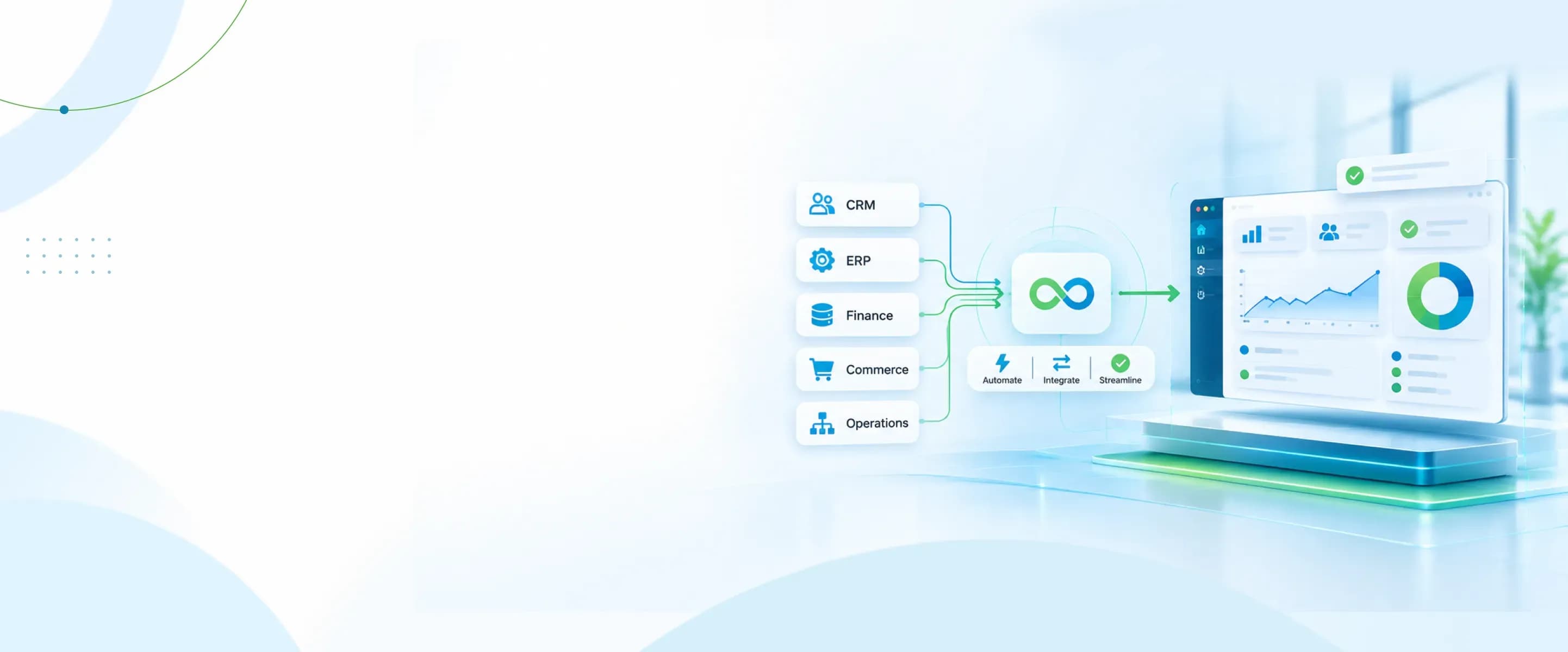
Connect the systems. Simplify the work around them.
Connect your systems and automate repetitive work so information and processes move more smoothly across your business.
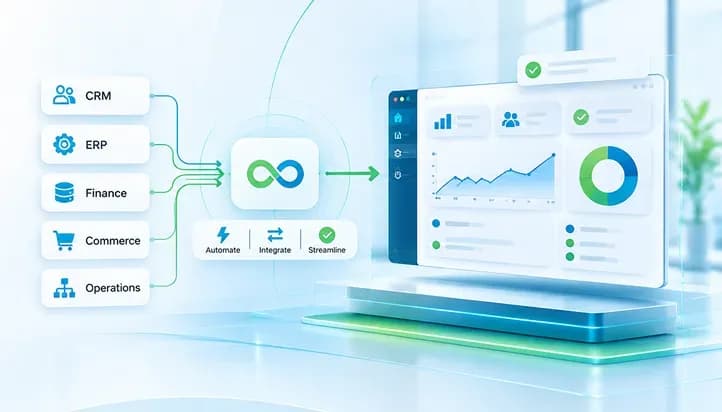
Connect the systems. Simplify the work around them.
Connect your systems and automate repetitive work so information and processes move more smoothly across your business.
Integration is useful only when it improves the way work gets done
Connecting two systems does not automatically solve an operational problem.
The first step is understanding how information moves today, which people are involved, where decisions happen, which exceptions matter and where the process breaks down.
We use that context to determine whether the right response is integration, workflow automation, a portal, a custom application or a combination of approaches.
Manual data entry between systems
Manual data entry between systems
Information is copied from CRM into finance, from commerce into operations or from one internal system into another. We help remove duplicated entry and reduce the errors that come with it.
Approvals depend on email and spreadsheets
Approvals depend on email and spreadsheets
Requests, approvals and status updates can become difficult to track when the process lives across inboxes and shared files. We can introduce structured workflows, notifications and auditability.
Customers or staff need information from several systems
Customers or staff need information from several systems
A simple request may require someone to search multiple platforms before responding. We can bring relevant information together through integrations, portals or operational applications.
Important processes rely on individual knowledge
Important processes rely on individual knowledge
Critical steps may depend on one person knowing what to do next. We help make the workflow more visible, repeatable and less dependent on informal hand-offs.
Existing systems do not support the full process
Existing systems do not support the full process
Packaged platforms may handle their core function well but leave important operational gaps. We can extend the process without replacing useful systems unnecessarily.
Reporting requires manual consolidation
Reporting requires manual consolidation
Teams may export data from several systems and combine it manually before they can understand what is happening. We help improve the flow of information into operational reporting and decision-making.
Many inefficiencies are symptoms of disconnected processes.
The objective is not to add more software. It is to remove unnecessary friction.
Practical ways to connect systems and improve operations
Different operational challenges require different solutions. SVAAPTA considers the business process first, then determines whether integration, automation, portals, custom applications or AI-assisted capabilities are appropriate.
Systems Integration
Connect CRM, ERP, finance, commerce and other business systems to improve data flow and reduce manual entry.
Workflow Automation
Automate repetitive tasks, approvals, notifications and data synchronisation while keeping human oversight where needed.
Customer, Employee & Partner Portals
Create self-service portals and dashboards that bring information and workflows together across existing systems.
Custom Operational Applications
Build tailored applications to address operational gaps without replacing existing business systems unnecessarily.
AI-Assisted Operations
Introduce practical AI for document extraction, knowledge assistance, request classification and workflow decision support.
Reliable, visible and secure connected operations

Reliable Integration & Failure Handling
Reliable Integration & Failure Handling
Design integrations to handle system failures, incomplete data and API changes through validation, retries, alerts and exception handling.

Data & Operational Visibility
Data & Operational Visibility
Improve reporting and operational visibility by connecting information across systems and reducing manual data consolidation.

Security, Access & Data Protection
Security, Access & Data Protection
Consider authentication, authorisation, access controls, secure data handling and logging when connecting business-critical systems.
Modernise without replacing everything
Rather than replacing every platform, SVAAPTA helps improve existing systems through better integrations, automated workflows, APIs and targeted applications.
This allows businesses to address operational gaps while retaining the value of their existing technology.
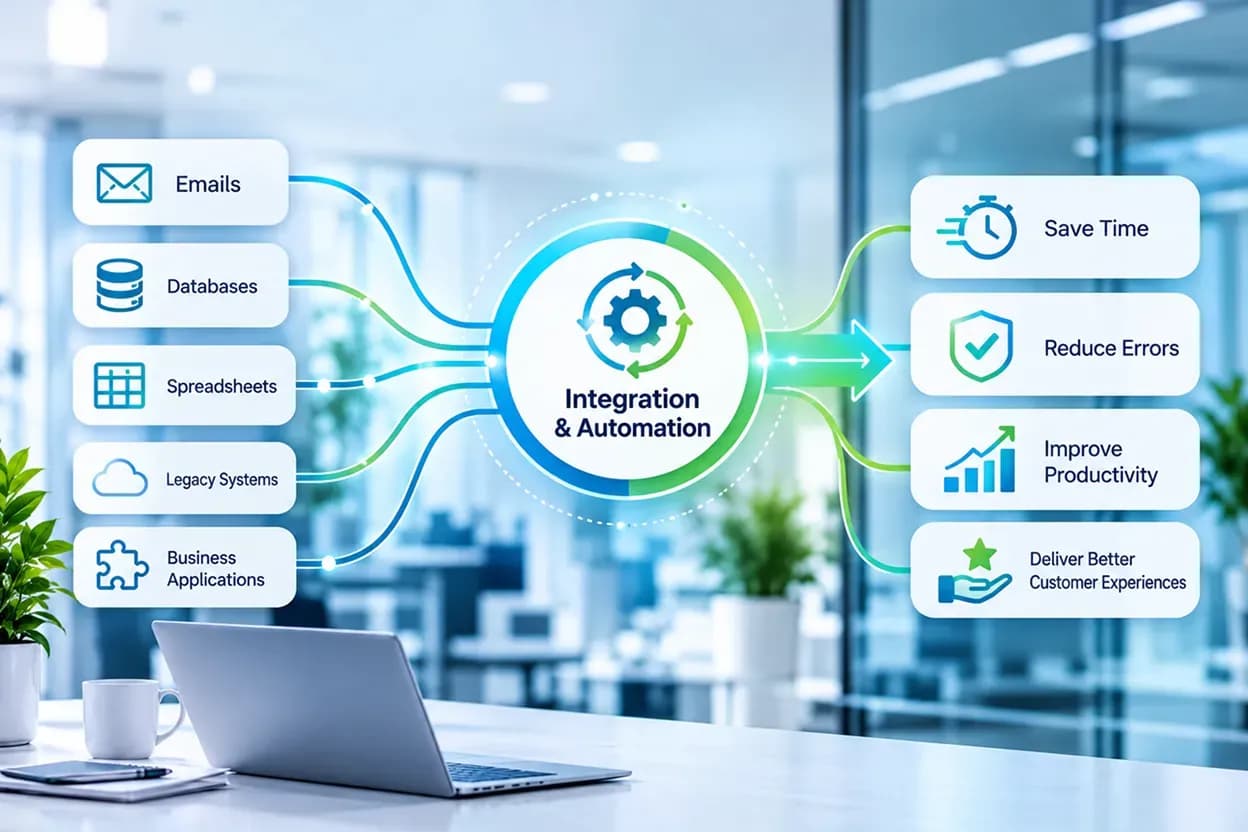
From understanding to implementation
Start with one operational challenge. Define the right solution, deliver it and improve it as your business evolves.
- 01
Understand
Map the business process, users, systems, dependencies and pain points.
- 02
Define
Agree the target workflow, integration boundaries, exceptions and responsibilities.
- 03
Deliver
Implement the integration, automation or application with appropriate testing and operational visibility.
- 04
Evolve
Measure how the process performs in practice and improve it as business requirements change.
Experience translating specialised ideas into working software
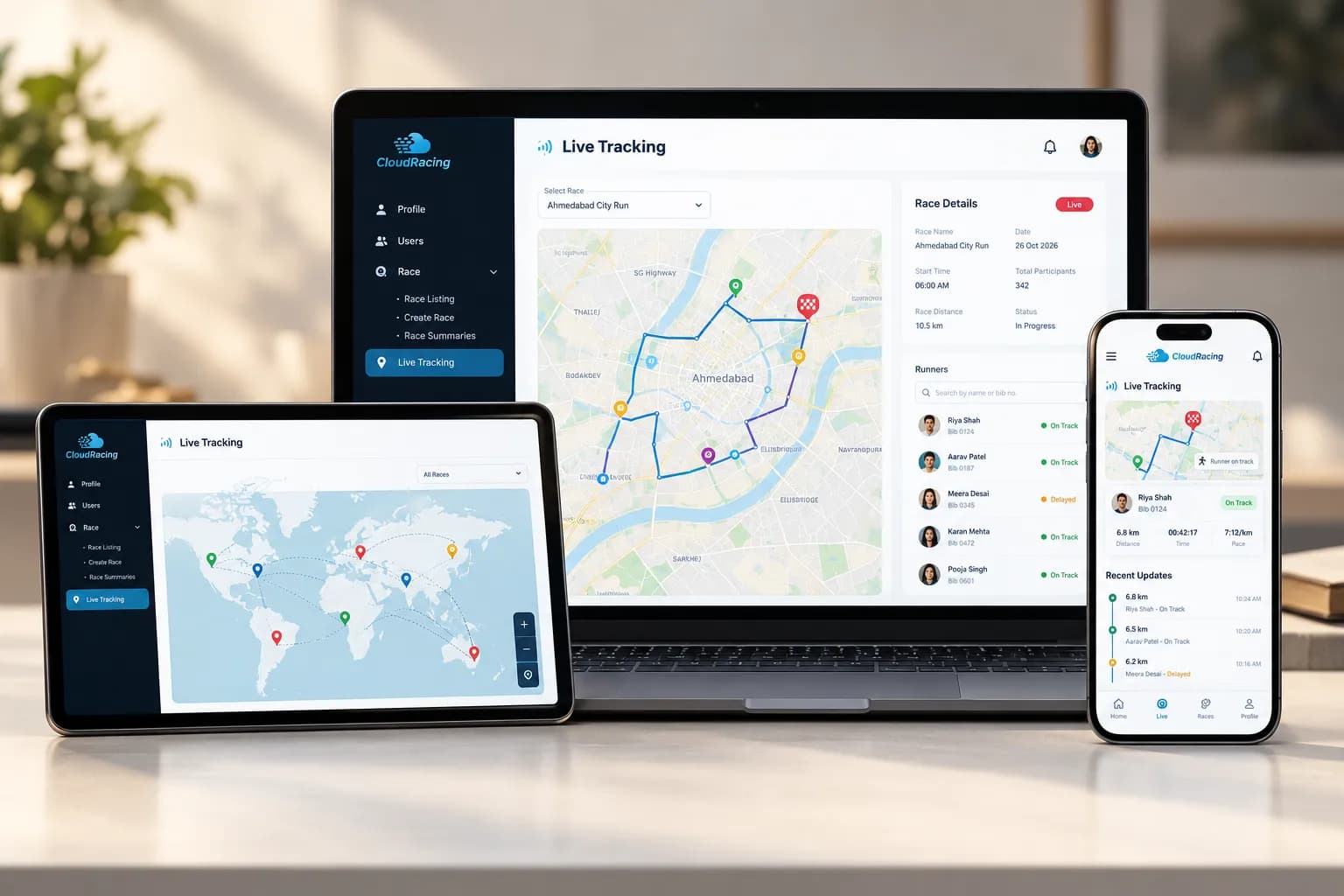
CloudRacing
CloudRacing demonstrates SVAAPTA’s ability to work with a founder-led concept involving specialised domain workflows and evolving product decisions.
The engagement required understanding the domain, translating requirements into product behaviour and supporting the development of a functioning digital platform around the founder’s vision.
UK-facing engagement backed by engineering capability in India
SVAAPTA combines UK-facing commercial engagement and solution leadership with engineering capability in India across application development, APIs, integrations, QA and support.
This keeps business requirements and technical delivery connected through one coordinated engagement.

Make the systems work together so your teams do not have to.
If disconnected platforms, manual administration or fragmented workflows are creating unnecessary operational effort, we can help define a practical integration and automation path around the systems you already use.